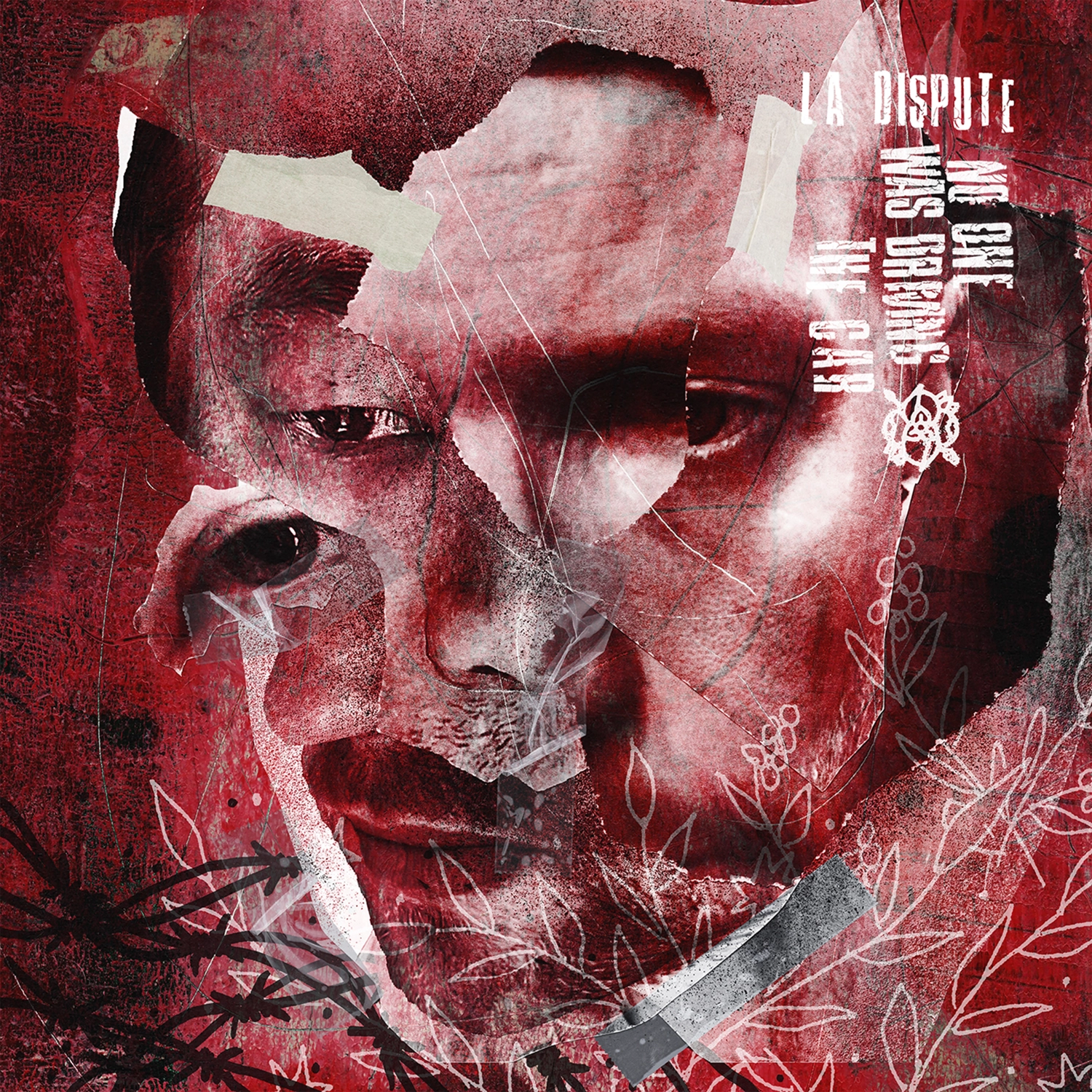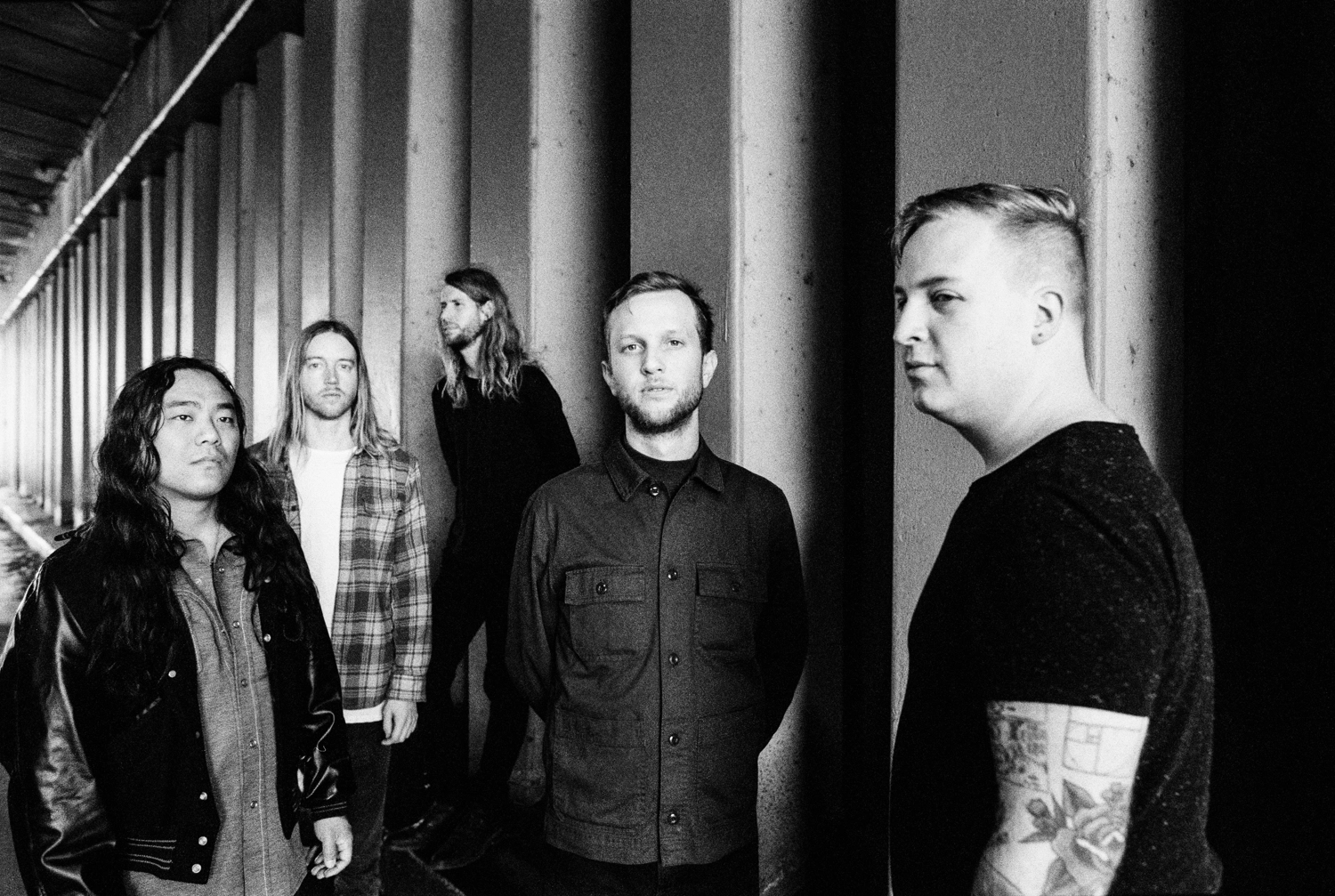

As they prepare for two sets at this weekend’s 2000trees Festival, La Dispute have shared the third act from their forthcoming ‘No One Was Driving the Car’ record. It sees the conceptual band share five new songs – ‘Self-Portrait Backwards,’ ‘The Field,’ ‘Sibling Fistfight at Mom’s Fiftieth / The Un-sound,’ ‘Landlord Calls the Sheriff In,’ and ‘Steve’.
“The next act encompasses in more focused detail the narrator’s look backwards down the path, beginning at their shared home in the present day,” La Dispute vocalist Jordan Dreyer explains in a detailed breakdown of the five songs. He goes on to say the moments the narrator looks back on include a haunting childhood hunting trip, a family fight at his mother’s fiftieth, an unsettling encounter with a religiously tinged MLM scheme, and bittersweet memories of a late friend. You can read Dreyer’s full piece below.
A video for its middle track, ‘Sibling Fistfight at Mom’s Fiftieth / The Un-sound’ can be viewed below. You can also stream all five tracks as an EP. Collectively, the five tracks paint an intense, at times bleak, picture that takes shape in various forms. ‘Self-Portrait Backward’ drifts with twinkling acoustics. ‘The Field’ before ‘The Field’ breezes in with Dreyer’s distinct spoken-sung style. While ‘Landlord Calls the Sheriff In’ wily webs its way through twisting guitars and a rigid bassline. ‘Steve’ is equally intense, allowing Dreyer’s to bite through gritted teeth.
La Dispute will be back in the UK this weekend. They’ll be playing a one-off headline show in Leeds before performing two sets at the 2000trees Festival.
July
10th Brudenell Social Club, Leeds
11th The Forest stage – 2000 Trees Festival, Cheltenham
12th The Axiom stage – 2000 Trees Festival, Cheltenham
‘No One Was Driving the Car’ is set for release through Epitaph Records on September 5th. Pre-order ‘No One Was Driving the Car’ here.
Watch the video for ‘Sibling Fistfight at Mom’s Fiftieth / The Un-sound’
Listen to Act III of ‘No One Was Driving the Car’
Read Jordan Dreyer’s Full Explanation of Act III of ‘No One Was Driving the Car’
“the next act encompasses in more focused detail the narrator’s look backwards down the path, beginning at their shared home in the present day, where the dissociation introduced in act one as almost entirely a self-inclosed thing trickles outward and troubles the comfort outlined in the last section of the song preceding it. He examines his own life through imagined self-portraits, in various sequences of time (fractions of days first, then weeks, months, years), and through multiple specific events. from there, four critically influential events from his earlier life are detailed in four songs;
first, a story from his early teenage years, where he and his brother – up north hunting with their father in the area where he and his own brother (the boys’ uncle, who has long lived far away elsewhere), and their father (who died when they were young) – stumble upon what they believe to be an abandoned paramilitary compound. in the middle of the field, beside it, they come to a hole dug in the ground full of deer carcasses. The narrator becomes fixated on the bodies below, unable to break his gaze from them, while the brother continues on toward the compound, a metaphor both for their diverging paths and for the obsessions/explanations that motivated them to take which ones they did.
the second song happens a few years later, at their mother’s fiftieth birthday party, where several siblings – drunk and airing internal grievances – fight on the basement staircase while their mother contemplates what role her own actions as a parent played in their arrival at that moment and in the conflicted history that led up to it. in the second half of the song, the siblings are gathered at the parents’ house again, years after the fight, for a quarterly group birthday celebration for several of their own children.
The third song occurs years on from there, with a pitch made to the partner of the narrator – working through undergrad at the time – from purveyors of a multi-level marketing company central to the history of grand rapids, and in some ways inextricably entwined with the christian reformed church mentioned earlier on the record (somewhat importantly, the rapture is invoked at the very end of the song, in a section discussing extraordinary wealth).
the final song centres around the friend whose funeral appeared earlier in act two, and is presented as reflections of their shared experiences together in youth, chiefly a snowy night drifting in a car together across an empty church parking lot, and the crash that occurred when the car spun on ice to slide sidelong into a curb and embankment. The end of the song harkens back heavily to the second section of act two (the song ‘Environmental Catastrophe Film’) and represents a full-circle consideration of the control dictated to him via exposure to calvinist teachings in childhood”.